Papa Murphy’s Pizza
- 4.0
- Rating
- 1.00M
- Installs
- Free
- Price

 Analysis by App-foxy
I tried Papa Murphy’s Pizza as a practical ordering app rather than treating it like a simple digital menu. My main question was whether it actually makes a shared household order easier: one person choosing dinner, another checking the details, and everyone avoiding the usual last-minute confusion. In that role, it is a focused Food & Drink app from Papa Murphy's, available free of charge and rated for Everyone.
The basic appeal is clear. Instead of calling a store or rebuilding the same order from memory, I could use the app to arrange a Papa Murphy’s pizza order and keep an eye on rewards in the same place. That makes it most useful for repeat customers, busy households, and anyone who already knows which nearby location they prefer. It is less compelling if you are comparing many restaurants, looking for broad delivery choices, or hoping to discover an entirely new kind of meal.
How it works when several people share the decision
A realistic household use case is a weeknight when one person is commuting, another is collecting preferences, and the final order has to be placed quickly. I found that the app fits this situation best when one person acts as the order owner. That person can gather requests, review the pizza choices, and keep the reward activity associated with the same account instead of having several people independently create slightly different carts.
You May Also Like

 Blood Strike: 2.5 Anniversary
Blood Strike’s Loadouts Turn Every Drop Into a Tactical Gamble
A close look at Blood Strike’s custom loadouts: how fast access to signature weapons reshapes its battle royale rhythm, rewards preparation, and narrows the gap between fights.

 Pandora - Music & Podcasts
Pandora’s Music Is Easy to Start, but Harder to Recover
Pandora’s strength is its low-effort path from a seed to a station. Its weak spot is how much confidence it asks you to place in connection, setup, and quiet recovery.

 8 Ball Pool
 Is Built on Rivalries, Rematches, and Routine
A close look at the rivalries, rematches, shared routines, and unanswered safety questions that turn a quick pool match into a persistent mobile community.

 Samsung Music
’s Quiet Strength Is Playing What You Already Own
Its reach comes less from spectacle than from dependable access to a personal library. That simplicity is both the app’s strongest retention engine and its ceiling.

 AccuWeather: Weather Radar
AccuWeather Review: A Quick, Clear Forecast for Everyday Decisions
For everyday plans, the best forecast is the one you can understand quickly. AccuWeather makes rain timing, radar, and local conditions easy to act on, with a few trade-offs.

 Hill Climb Racing
Why Hill Climb Racing Still Turns Crashes Into One More Run
A tiny car, a bumpy hill and one more upgrade: Hill Climb Racing keeps resurfacing because its simple chaos makes every near-miss feel personal.
More From Our News Desk



That sounds minor, but it changes the rhythm of ordering. A shared phone or tablet can be passed around while people decide what they want, then returned to the person who is responsible for checking the final selection. The app is not a household planner, and I would not treat it as one. Its strength is narrower: it keeps the restaurant order and rewards experience together so the group does not need to coordinate through several unrelated tools.
For a family, roommates, or a couple, I recommend agreeing on the order before opening the final checkout steps. One person can ask for toppings and size preferences, while another checks whether the selected store and pickup details make sense. This is more reliable than letting everyone tap around freely on the same device, especially when the group is hungry and making changes quickly.
The most useful shared-device habit is to assign one person final responsibility for the cart. That does not require pretending the app has special family permissions. It simply prevents a common problem with food ordering: several people assume someone else confirmed the details, while nobody actually checked them.
What setup feels like in everyday use
The app is free, and its purpose is immediately understandable. I would install it for a household that orders from Papa Murphy’s often enough to value a dedicated ordering route and reward tracking. The current version is 26.1.2026020401, and it requires Android 10 or later. That Android requirement matters when a family shares an older phone or keeps a spare device in the kitchen; the app may be a poor fit if that device cannot run the current software.
Before handing the phone to children or guests, I would complete the basic account and ordering setup myself. The important boundary is not a complicated control panel. It is deciding who may use the account, who is allowed to edit an order, and who is responsible for the final confirmation. Keeping that agreement clear is especially helpful when the device is shared between adults and younger family members.
I would also avoid leaving an active order screen unattended on a communal device. Someone else might change a selection simply because they are browsing, or assume that a draft order is ready to submit. The app’s convenience works best when the household treats the account as belonging to the designated order manager, even if other people help choose the meal.
For a first order, I would take a slow pass through the menu and confirm the store before rushing. For later orders, the process should feel more familiar, but I still would not rely on memory. Restaurant menus, customization choices, and pickup details are exactly the areas where a quick tap can create an unwanted result. The app reduces friction; it does not remove the need to read the final screen.
Rewards are useful, but they change how I would share the account
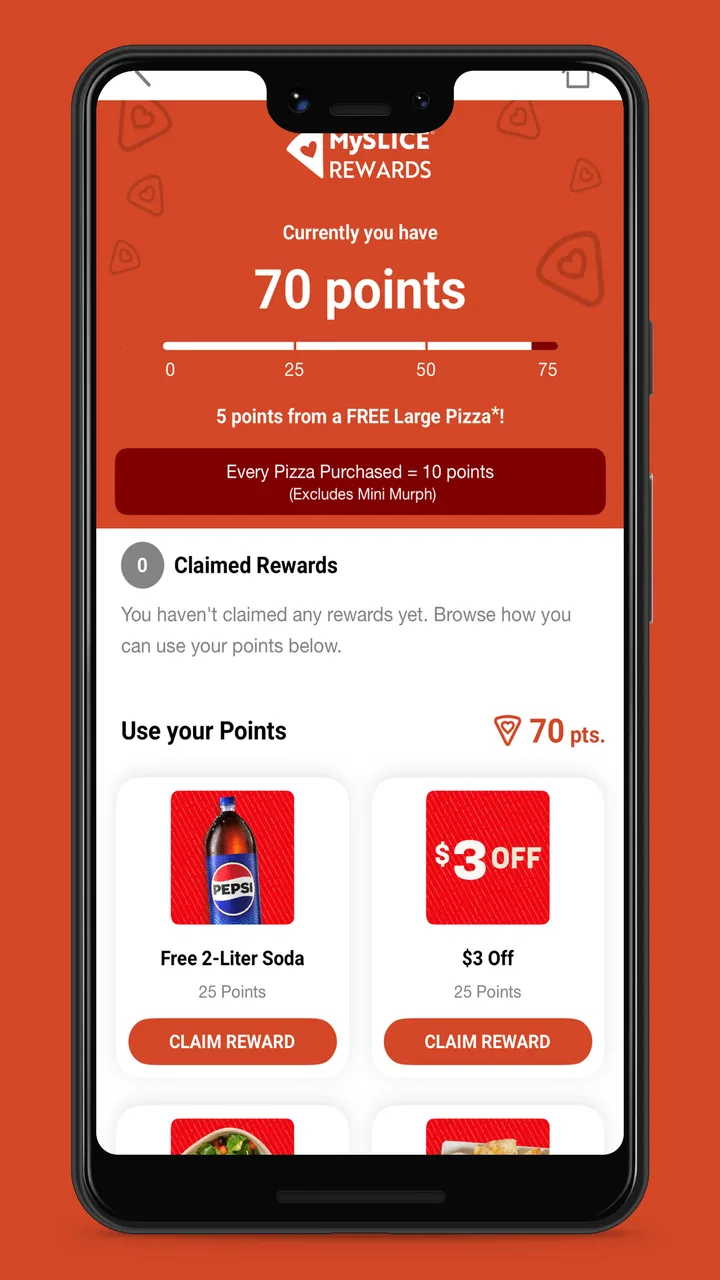
The rewards feature is one of the reasons I would choose this app over placing an order through a general browser search. If several household members order under one account, the reward activity can remain in one place. That is convenient for a family that wants one person to monitor progress and decide when to use an available benefit.
There is a trade-off, though. A shared account means the people using it should agree about who controls reward decisions. One person may want to save rewards for a larger gathering, while another may expect to use them on the next order. The app can support the ordering routine, but it cannot settle that household disagreement for you. I would discuss the plan before anyone starts changing the cart.
This is also where account boundaries matter. I would not casually share sign-in details outside the household, and I would be careful about leaving the account open on a device that many people use. The practical advantage of centralized rewards is strongest when the group trusts the account owner and understands that order history and reward activity are being managed together.
For roommates, a shared account can be convenient when one person regularly places group orders, but it may be less suitable when everyone pays separately and wants independent control. In that case, a general ordering method may create fewer arguments, even if it is less streamlined. The dedicated app is at its best when convenience and shared responsibility point in the same direction.
Coordinating a group order without turning it into a project
I would use the app after collecting preferences in a message thread or a quick conversation, not as the place where the entire discussion happens. The app is designed for making the order, not for polling a household, assigning costs, or documenting who asked for each topping. Keeping those conversations outside the app makes the final screen easier to review.
A useful workflow is to establish a cutoff: everyone gives their choices, one person enters them, and the group gets one final chance to check the summary. This avoids repeated edits by different people. It also gives the order owner a clear moment to verify the selected location and pickup plan before proceeding.
For a family with children, I would let them help choose within boundaries rather than handing over the entire process. They can suggest a pizza or check whether their preferred option appears in the cart, while an adult handles the account and final submission. That approach gives children a role without assuming the app provides parental controls or child-specific account tools.
For a larger gathering, I would be more cautious. A dedicated restaurant app can be faster than a phone call when the menu is familiar, but it is not automatically the best solution for a complicated event with many separate preferences. The more custom the order becomes, the more important it is to slow down and verify each item. If the group needs individual payment splits or a detailed shared checklist, another tool may still be necessary alongside the app.
One non-obvious advantage is that the app can reduce repeated questions between the person ordering and the people eating. Rather than asking someone to remember the restaurant’s choices from a previous visit, the order owner can work from the available selections on screen. That is not the same as a full household profile, but it can make recurring Friday-night orders less dependent on one person’s memory.
Age context and trust on a shared device
The Everyone content rating makes the app broadly appropriate in age context, but that should not be confused with unrestricted purchasing authority. A child may be able to understand the menu and help select food, while an adult still needs to decide whether an order should actually be placed. The sensible boundary comes from the household’s rules and the account owner’s judgment, not from the age label alone.
I would especially keep final approval with an adult when the device is used by younger family members. That protects against accidental orders and keeps reward decisions clear. It also makes the app easier to use as a teaching tool: children can practice reading choices, comparing options, and checking a summary without being responsible for the transaction.
Trust matters between adults as well. If a partner, roommate, or teenager uses the same account, everyone should know whether they are browsing, editing, or submitting. A shared device makes those activities look similar, so a simple household rule is valuable: browsing is open, editing happens with permission, and final confirmation belongs to the person who owns the order.
I would not recommend this app as a way to supervise family eating habits or control another person’s access. That is outside its practical role. It is a restaurant ordering tool with rewards, and it works better when the household uses it transparently rather than expecting it to manage people.
Where it beats usual alternatives
Compared with calling the restaurant, the app is more comfortable when I already know what I want and do not want to repeat a complicated order aloud. The visual process gives the order owner a chance to review selections before submitting them. That is particularly helpful in a shared household, where a spoken request can easily be misunderstood or forgotten.
Compared with searching through a broad food marketplace, the dedicated app is more focused. I would not open it to compare every nearby cuisine or restaurant. I would open it because Papa Murphy’s is already the intended choice and I want a direct route to ordering and rewards. That focus is a strength for loyal customers, but a limitation for people who choose dinner based on delivery range, restaurant variety, or marketplace discounts.
Compared with using a mobile browser, the app feels more like a repeat-order destination. The dedicated format makes sense when the same household returns to the same restaurant. However, someone who orders only once, wants to avoid another installed app, or is still deciding between several restaurants may find a browser search more flexible.
The rewards element gives the app another reason to stay installed. A household that remembers to check rewards before ordering may get more value from the dedicated experience than someone who never uses loyalty features. I would still treat rewards as a bonus rather than the sole reason to choose a meal. The right order should come first; reward tracking should make the routine easier, not push the household into an order it did not want.
Limitations I noticed before recommending it
The app’s narrow focus is both its best quality and its main limitation. It is not a general food discovery service, a shared expense manager, or a family calendar. If your household needs delivery comparisons, split payments, or detailed planning, you will probably combine it with other tools or choose a broader ordering option.
It also depends on the household having a clear process. Without one, a shared account can become confusing: one person edits the cart, another assumes it is final, and a third expects the rewards to be used differently. That is not a flaw unique to this app, but the centralized account model makes the agreement especially important.
Device compatibility is another practical consideration. Android users need Android 10 or later, so an older shared handset may be excluded even if it still handles other basic tasks. I would check the device before making it the household’s main ordering screen, rather than discovering the restriction during a hungry evening.
The public reception is mixed but respectable, with an average rating of 3.7 from around 17 thousand ratings. I read that as a reason to keep expectations realistic: many people find the app useful, but it is not an experience I would describe as universally smooth. Its large reach, with over one million installs, shows that it serves a substantial audience, yet popularity does not remove the need to check the order carefully.
Who should install it, and who should skip it
I would recommend it to a household that orders Papa Murphy’s regularly, wants one person to coordinate dinner, and values having rewards connected to the ordering process. It is also a good fit for a couple or roommate group that can agree on one account owner and one final review step.
I would be more cautious about recommending it to someone who rarely eats Papa Murphy’s, uses an older Android device, or wants to compare many restaurants in one place. A browser or broader food-ordering service may be more practical for those needs. I would also skip it as a primary household tool if every person insists on separate accounts, separate payments, and independent reward decisions.
For parents, the app can work well as a supervised way for children to participate in choosing dinner. I would not hand over final account control simply because the content rating is Everyone. For roommates, I would use it only after agreeing on payment, reward ownership, and who checks the final order.
My household verdict
After using it with shared-device habits in mind, I see Papa Murphy’s Pizza as a useful specialist rather than an all-purpose food app. It makes the most sense when the restaurant choice is already made and the real goal is to place the order quickly while keeping rewards in view. The experience becomes noticeably better when one person coordinates the cart and everyone else contributes preferences before the final review.
The app is free, comes from Papa Murphy's, and is suitable in broad age terms, but those facts do not replace sensible household boundaries. Keep the account with a trusted order owner, let younger users participate under supervision, and do not expect the app to handle group payments or family organization. Those small rules address most of the friction I encountered.
My recommendation is positive for repeat Papa Murphy’s customers, especially families and roommates who want a simple shared routine. I would not install it merely to explore dinner options or replace a full-service marketplace. If the restaurant is already your destination, the app can remove unnecessary steps; if the restaurant is still undecided, its focused design may feel restrictive.
In short, I would keep it on the phone of the person who usually organizes pizza night, not necessarily on every device in the home. Used that way, it gives the household a clear center for ordering and rewards without pretending to be a family-management system. That focused role is exactly why I find it worthwhile, provided everyone knows who is in charge of the final tap.
FAQs for Papa Murphy’s Pizza
01What features does the Papa Murphy’s Pizza app offer?
The Papa Murphy’s Pizza app provides a seamless experience for ordering your favorite pizzas. You can customize your orders, choose from a variety of toppings, and schedule pickups. The app also offers exclusive deals, a rewards program, and the ability to save favorite orders for quick access next time.
02Is the Papa Murphy’s Pizza app available on both Android and iOS?
Yes, the Papa Murphy’s Pizza app is available for download on both Android and iOS devices. You can find it on the Google Play Store for Android users and the Apple App Store for iOS users. The app is regularly updated to enhance functionality and user experience.
03Are there any costs associated with using the app?
Downloading and using the Papa Murphy’s Pizza app is free. However, costs are incurred when you place an order. Prices vary depending on the type of pizza and additional customizations. The app often features exclusive deals and discounts, making it cost-effective for users.
04How does the rewards program work within the app?
The rewards program in the Papa Murphy’s Pizza app allows users to earn points with every purchase. These points can be redeemed for discounts or free items. You simply need to sign up within the app and use it to place orders to start accumulating points. It's an excellent way to save on future purchases.
05What should I do if I encounter issues with the app?
If you face any issues while using the Papa Murphy’s Pizza app, you should first check for updates, as app updates often fix bugs. If problems persist, contact their customer support through the app or their website for further assistance. They are committed to providing a smooth user experience.
Pros
- User-friendly interface for easy navigation.
- Customizable pizza options to suit tastes.
- Frequent promotional deals and discounts.
- Order tracking for real-time updates.
- Nutritional info available for health-conscious users.
Cons
- Limited delivery options in some areas.
- No option for dine-in orders.
- App occasionally experiences slow loading.
- Requires account creation to place orders.
- Limited international availability.

Papa Murphy’s Pizza
Gallery